The alert has gone out.
Homelessness is skyrocketing. Bill Roscoe, CEO of the Boise Rescue Mission says the mission has seen a 40% increase in stays over the past two years. According to the Idaho Press, “the Nampa location in particular, the shelter has seen an 80% increase. Among this increase has been growth in the senior homeless population”.
That may seem like an economic issue, and it is. But it’s more than that.
The economy is quickly becoming a tool used to make more and more women and children vulnerable. Ultimately, that means more and more easy victims.
In the case of Boise Rescue Mission, it is corporations and large local businesses, healthcare giants and small businesses that have been among the biggest financial donors to Boise Rescue Mission. The local community helps support them through donations, many of which come from individual donors.
Sadly, individuals who have attempted to promote anti-trafficking in the valley have had their efforts not only met with opposition but also just plain ignored across the board.
So, while the economy worsens, and more and more women and children are falling into homelessness, the system is failing them on literally every level. They may be able to get a room or a bed for a night, but the slightest setback – an issue with their health, their vehicle or employment and they are quickly swept into a system of cycling through programs and government red tape.
This recent evaluation of the situation provides excellent insight into the issue and what’s happening in real time – literally the numbers are increasing at a staggering rate.
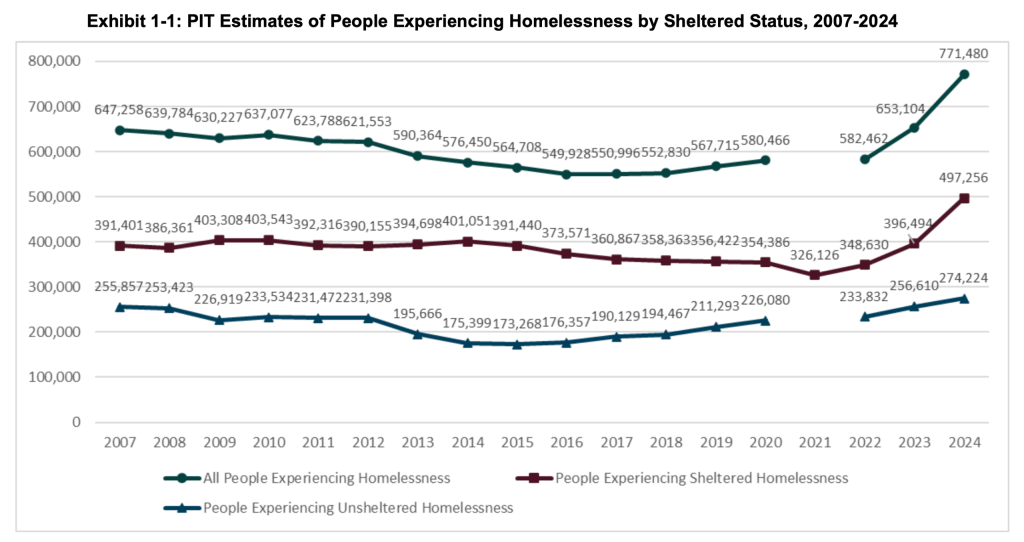
Very few people really understand how significant this is and what it means for families that may be barely staying afloat, but are literally one emergency away from losing the roof over their head.
And, while there are a few policies in the last decade that have worked in certain places, there has been a massive failure to correct the problem on a larger scale. The most effective ones tend to be Housing First + permanent supportive housing + cross-system coordination. But because homelessness is driven by very powerful structural forces (housing affordability, economic inequality), even strong programs are overwhelmed without bigger systemic change.
According to the NIH, “Jurisdictions across North America are grappling with the toll that the opioid epidemic, exacerbated by the global coronavirus disease 2019 pandemic, is taking on their communities, and they are devising actionable plans to improve the welfare of their most vulnerable citizens.26 Despite the numerous challenges created by the pandemic, one unexpected secondary positive effect was the expansion of the capacity for many communities to provide health care outreach.”.
More than ever, we as citizens need to be aware of the toll government dependence is taking on our society, as faith based organizations bear less and less of the burden for issues that historically were largely managed by them. Without neighbors or family to look in on, support or help those who have been hit hardest by the economic devastation of the last 5 years, many are finding themselves on the outside of society, struggling just to survive.
As faith communities, we are called to an even higher standard. “Whatever you have done for the least of these, you have done for me” are words Jesus surely meant. It isn’t enough to pray and hope for things to get better, it takes action and commitment to making a difference, starting in our own families and communities. Without it, what we are offering simply becomes lip service.
Let’s take back our power by empowering others around us. Our communities are only as strong as the most vulnerable among us and if they’re left out in the cold, it won’t be long before the rest of us are too.

 KE Global Alliance